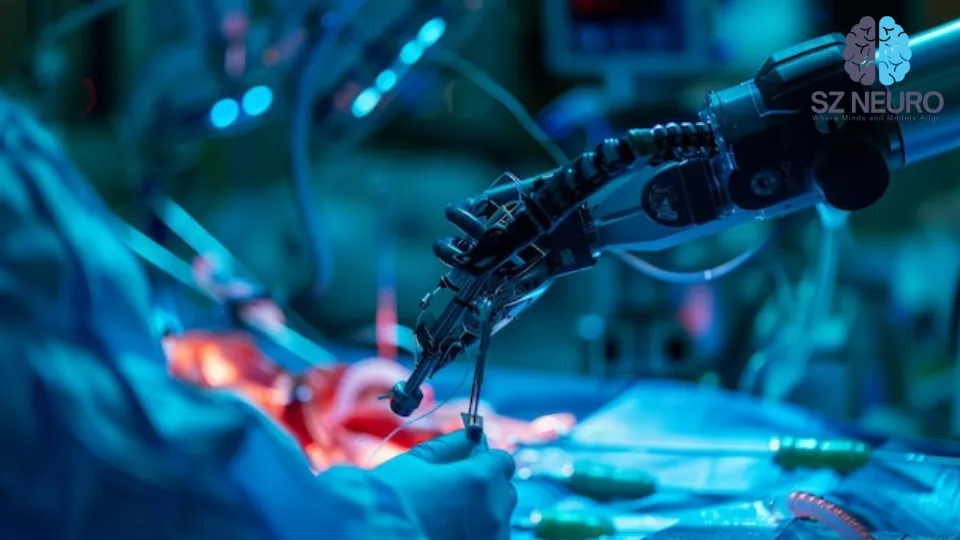

Summary: Surgeons have performed the first fully robotic heart transplant in the United States, using advanced robotic instruments to avoid opening the chest. The technique involves making precise incisions and accessing the heart through the preperitoneal space, preserving the chest wall.
The robotic approach offers several key benefits, including quicker recovery times, reduced infection risk, and minimal blood loss — all particularly crucial for transplant recipients on immunosuppressive therapy. In this case, the 45-year-old patient experienced a smooth recovery and was discharged one month after the procedure.
Important facts:
- Least invasive: Thanks to robotic surgery, it is no longer necessary to open the chest or break the breastbone.
- Fast recovery: Chest wall protection reduced the risk of infection and promoted mobility and respiratory function.
- Anemia: Avoiding cutting bones reduces the need for transfusion and reduces immune complications.
Source: Baylor College of Medicine
Surgeons at Baylor St. Luke’s Medical Center have performed a fully robotic heart transplant on an adult patient. This is the first time it has been reported in the United States.
Using a surgical robot, lead surgeon Dr. Kenneth Liao and his team made small, precise incisions, eliminating the need to open the chest and fracture the sternum. Liao removed the diseased heart, and the new heart was implanted through the preperitoneal space, avoiding an incision in the chest.
“Opening the chest and separating the sternum can delay wound healing, delay rehabilitation, and prolong patient recovery, especially in heart transplant patients who are taking immunosuppressive medications,” said Liao, professor and chief of cardiothoracic transplantation and circulatory support at Baylor College of Medicine and chief of transplant circulatory support at Baylor Saint Luke’s Medical Center.
“With the robotic approach, we preserve the integrity of the chest, reduce the risk of infection, and contribute to early mobility, respiratory function, and overall recovery.”
In addition to reducing surgical trauma, the medical benefits of robotic heart transplants include preventing excessive bleeding when cutting the bone and reducing the need for blood transfusions, which reduces the risk of antibodies forming against the transplanted heart.
Before the transplant, the 45-year-old patient had been hospitalized with heart failure since November 2024 and required multiple mechanical devices to support his heart function. In early March 2025, he underwent a heart transplant, and after surgery, he remained hospitalized for a month before being discharged without any complications.

“By achieving this medical breakthrough in robotic heart transplantation, Baylor St. Luke’s Medical Center further strengthens its position as a global leader in healthcare,” said Dr. Bradley T. Lembke, the hospital’s president.
“This achievement in heart transplantation is a source of great pride for our hospital and further strengthens its legacy of medical achievements and care for the most complex diseases that can only be successfully treated with the help of a modern health system.”
About this robotics surgery research news
Author: Taylor Barnes
Source: Baylor College of Medicine
Contact: Taylor Barnes – Baylor College of Medicine
Image: The image is credited to StackZone Neuro
This successful transplant highlights the incredible potential of combining cutting-edge technology with world-class surgical expertise to transform patient care. It serves as a powerful example of how innovation in the operating room can directly translate into better outcomes for patients — including faster recovery times, reduced pain, and lower risks of complications. As surgical techniques evolve, the integration of robotic systems allows surgeons to perform procedures that were once thought to be too complex or risky with far greater precision and control. This advancement not only raises the standard for what’s possible in modern medicine but also offers new hope to patients who may have limited treatment options.
Dr. Liao, one of the lead surgeons on the case, emphasized the broader vision driving this achievement. “This transplant shows what is possible when innovation and surgical expertise come together to improve patient care,” he said. “Our goal is to provide patients with the safest, most effective, and least invasive procedures, and robotic technology allows us to do this in an extraordinary way.” According to Dr. Liao, the success of this operation reflects a shift toward a future where high-risk procedures become safer and more accessible, thanks to continuous investment in technology and a relentless commitment to excellence in patient outcomes.
This robotic heart transplant marks a groundbreaking step forward in the field of cardiovascular surgery. By leveraging advanced robotic technology, we are now able to perform even the most intricate procedures with greater precision and control. This not only enhances surgical accuracy but also significantly reduces the physical trauma typically associated with traditional open-heart surgery. As a result, patients benefit from faster recoveries, fewer complications, and an overall improvement in outcomes — especially important for those with complex medical needs. It’s an extraordinary development that opens the door to a new era of minimally invasive heart transplants.
Dr. Todd Rosengart, Chief of the Michael E. DeBakey Department of Surgery, emphasized the significance of this accomplishment, calling it a major milestone in surgical innovation. “This robotic heart transplant represents a remarkable and important advancement that makes even the most complex surgeries safer,” he said. “We are thrilled to share this major achievement with the world.” According to Dr. Rosengart, the success of this procedure underscores the potential of robotic-assisted surgery to revolutionize how we approach high-risk operations and expands the possibilities for patients who were previously considered ineligible for transplant due to surgical complexity.