

Summary: Researchers have made major advances in their understanding of the neurological process of death.
Their research suggests that during anoxia, or lack of oxygen, the brain undergoes a number of changes, including a massive release of glutamate and an increase in gamma and beta waves, possibly related to near-death experiences. This is followed by the “death wave,” a high-amplitude wave that marks the transition to a complete cessation of brain activity.
The study, which focused on mice, revealed that this wave originates in pyramidal neurons in layer 5 of the neocortex and can be reversed under certain conditions. This offers new insights into the preservation of brain function during recovery.
Important facts:
- The ‘death wave’ in the brain, which marks the transition to a complete cessation of brain activity, begins in layer 5 of the neocortex.
- This wave can be reversed if revived within a certain time, indicating that there is a possibility of preserving brain function.
- The research provides further insight into neural mechanisms as death approaches, challenging the idea that a flat EEG is a sure sign of the end of brain function.
Source: Paris Brain Institute
Death is a difficult concept to describe from a neurological perspective. It is not a specific moment that marks the transition from life to death, but rather a process that lasts for a few minutes and can be reversed in some cases.
In a previous study, researchers from the “Epileptic Network Dynamics and Neuronal Excitability” team at the Paris Brain Institute showed that after a prolonged period of oxygen deprivation, also known as anoxia, there are successive changes in brain activity that can now be accurately described.
When the brain loses oxygen, its stores of ATP, cellular fuel, are rapidly depleted. This causes a disruption in the electrical balance in neurons and a massive release of glutamate, an essential excitatory neurotransmitter in the nervous system.
“Neural circuits seem to shut down at first,” explains neuroscientist Severin Mahon. “But then, there’s a sudden surge in brain activity, marked by a rise in gamma and beta waves.”
These waves are often associated with conscious experiences. In this context, they may play a role in near-death experiences experienced by cardiac arrest survivors.
Neuronal activity then gradually decreases to a state of complete electrical silence, corresponding to a flat electroencephalogram. This silence is rapidly disrupted, however, by neuronal depolarization, manifested as a high-amplitude wave known as a “death wave,” which alters brain function and structure.
This critical event, called anoxic depolarization, triggers neuronal death throughout the cortex. Like a swan song, it is a real signal of the transition to a complete cessation of brain activity, says Antoine Carton-Leclerc, a PhD candidate and first author of the study.
Until now, researchers did not know where the wave of death begins in the cortex and whether it spreads evenly throughout all layers of the cortex.
“We already knew that it was possible to reverse the effects of anoxic depolarization if we could resuscitate the subject within a certain time,” the researcher added.
“We still need to understand which areas of the brain are most likely to be damaged by the death wave so that we can preserve as much brain function as possible.”
Walking on the path of death wave
To answer these questions, the researchers used local field potential measurements and recordings of the electrical activity of single neurons in different layers of the primary somatosensory cortex, an area that plays a key role in body representation and processing of sensory information.
“We observed that neural activity was relatively uniform at the beginning of cerebral anoxia. Then, the death wave appeared in pyramidal neurons in layer 5 of the neocortex and spread in two directions: upward, i.e. the surface of the brain, and downward, i.e. the white matter,” explains Mah Severine.
We have also observed these dynamics in various experimental conditions and think that this may also occur in humans.
These findings also suggest that the deeper layers of the cortex are most vulnerable to oxygen deprivation, because pyramidal neurons in layer 5 have unusually high energy demands. However, when the researchers provided oxygen to the rat brains, the cells replenished their ATP supply, triggering neuronal repolarization and restoration of synaptic activity.
This new study advances our understanding of the fundamental changes in brain activity that occur as death approaches. It is now proven that, from a physiological perspective, death is a process that takes time… and that it is currently impossible to completely separate death from life.
“We also know that a flat EEG does not necessarily mean that brain function has permanently stopped,” concluded Professor Stéphane Charpier, head of the research team.
“We now need to determine the exact conditions under which these functions can be restored and develop neuroprotective drugs to support recovery in heart and lung failure.”
About this neuroscience and death research news
Author: Marie Simon
Source: Paris Brain Institute
Contact: Marie Simon – Paris Brain Institute
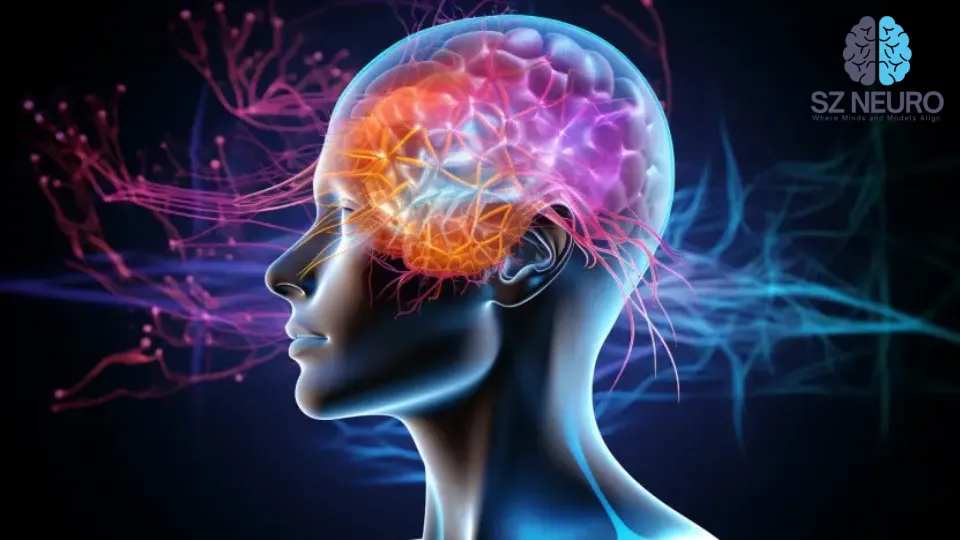
Image: The image is credited to StackZone Neuro
Original Research: Open access.
“Laminar organization of neocortical activities during systemic anoxia” by Séverine Mahon et al. Neurobiology of Disease
Abstract
Laminar organization of neocortical activities during systemic anoxia.
The neocortex is highly sensitive to metabolic dysfunction. When exposed to global ischemia or anoxia, the neocortex experiences a slowly propagating wave of collective neuronal depolarization that ultimately damages its structure and function. Although the molecular signatures of anoxic depolarization (AD) are well documented, little is known about the brain states that precede and follow the onset of AD.
Here, we investigated the laminar expression of cortical activities induced by transient anoxia in the primary somatosensory cortex of rats using multisite extracellular local field potential and intracellular recordings from identified pyramidal cells.
Immediately after the interruption of cerebral oxygenation, we observed a systematic series of stereotyped activity patterns across all cortical layers. This sequence included an initial period of beta-gamma activity, which was rapidly replaced by delta-theta oscillations, followed by a decrease in all spontaneous activity, indicating a transition to a sustained period of electrical silence.
Intracellular recordings showed that cortical pyramidal neurons were depolarized and highly active during high-frequency activity, became inactive and lacked synaptic potentials during the isoelectric state, and exhibited subthreshold compound synaptic depolarizations during low-frequency periods.
In contrast to the strong temporal synchrony of pre-AD activity along the vertical axis of the cortical column, the onset of AD was not uniform across layers. AD initially occurred in layer 5 or 6 and then spread bilaterally, both ascending and descending. In contrast, post-anoxic waves, which indicate repolarization of cortical neurons after cerebral reoxygenation, did not show a distinctive spatiotemporal profile.
Pyramidal neurons at the onset of Alzheimer’s disease exhibited a higher unpolarized resting potential and a higher spontaneous firing rate than superficial cortical cells. We also observed that the pattern of AD proliferation was reliably reproduced by focal injection of a sodium-potassium ATPase inhibitor, suggesting that the dynamics of cortical AD may reflect layer-dependent variations in cellular metabolic regulation.