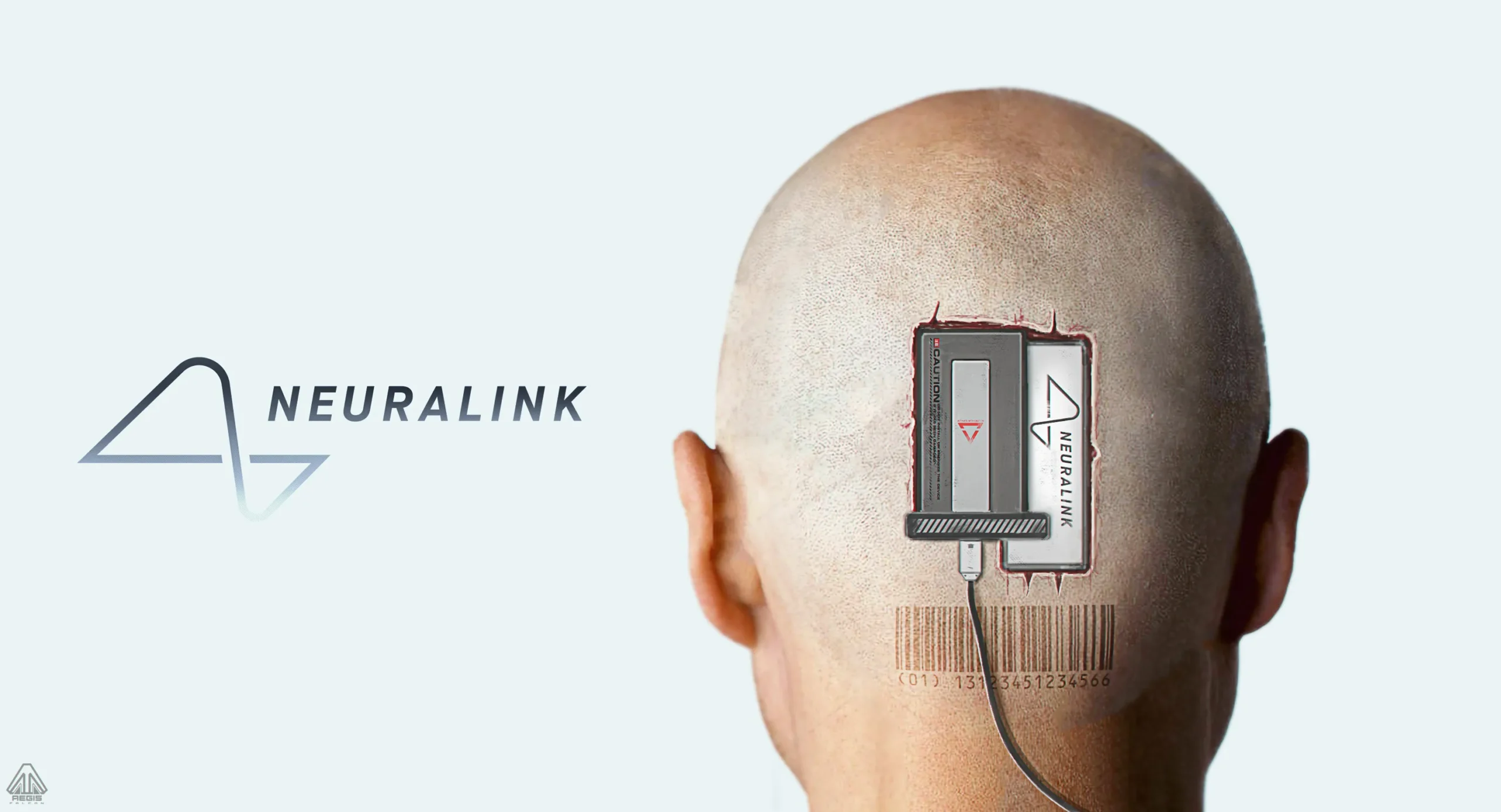

Summary: Elon Musk announced the successful implantation of Neuralink’s first brain chip, called Telepathy, into a human. The chip aims to enable people with severe physical disabilities to control devices with their thoughts. The FDA-approved clinical trial focuses on the implant’s motion control capabilities. The patient is reportedly recovering and showing promising early results.
Neuralink’s mission ranges from providing immediate medical care to improving human cognitive and sensory abilities in the long term. This development raises a range of scenarios, from broad and optimistic adoption to concerns about the technical, ethical, and social implications.
Key data:
- Following FDA approval in 2023, the first human clinical trial of Neuralink’s brain-computer interface implant has begun.
- The implant, called Telepathy, is designed to help people with severe physical disabilities control digital devices through their thoughts.
- Amid various social, ethical, and technological challenges, the future of the project ranges from potential medical applications to broader cognitive enhancement.
Source: The Conversation
The first person to receive a Neuralink brain implant was about to do so, according to co-founder Elon Musk. The neurotechnology company began its first human clinical trial in 2023 after receiving approval from the U.S. Food and Drug Administration (FDA).
The clinical trial focuses on an implant that allows people with severe physical disabilities to control digital devices with their thoughts. The research involves implanting a brain chip – a so-called brain-computer interface implant – into the part of the brain that controls the intention to move.
Elon Musk shared that the patient who received Neuralink’s brain implant, known as Telepathy, is currently recovering well. Early findings from the trial indicate successful detection of neuronal action potentials, suggesting that the device is functioning as intended in its initial phase.
However, detailed information about the trial’s progress and outcomes has not yet been made public. As anticipation builds, researchers and observers await further updates to better understand the implant’s capabilities and its potential impact on brain-computer interface technology.
This development is more than a technological milestone. It represents a major leap forward in the possibilities of human-computer interaction, and raises important questions about the integration of modern technology with the human body and mind.
Neuralink’s mission
Neuralink’s mission centers on developing a universally accessible brain interface that empowers individuals with medical conditions affecting mobility, communication, or cognition. By restoring autonomy to people with unmet medical needs, the company aims to dramatically improve quality of life and expand human capabilities through advanced neurotechnology.
To achieve this, Neuralink pursues two primary approaches: first, creating assistive technologies that help patients regain control over essential functions such as movement and speech; and second, exploring long-term enhancements that could unlock broader human potential by integrating brain-computer interfaces into everyday life. These dual goals reflect both a humanitarian focus and a vision for transformative innovation.
In the short term, the focus will be on people with medical needs. The long-term vision goes much further and focuses on improving human development. This suggests that Neuralink envisions a future where its technology extends beyond the medical field and becomes a means of cognitive and sensory enhancement for the general population.
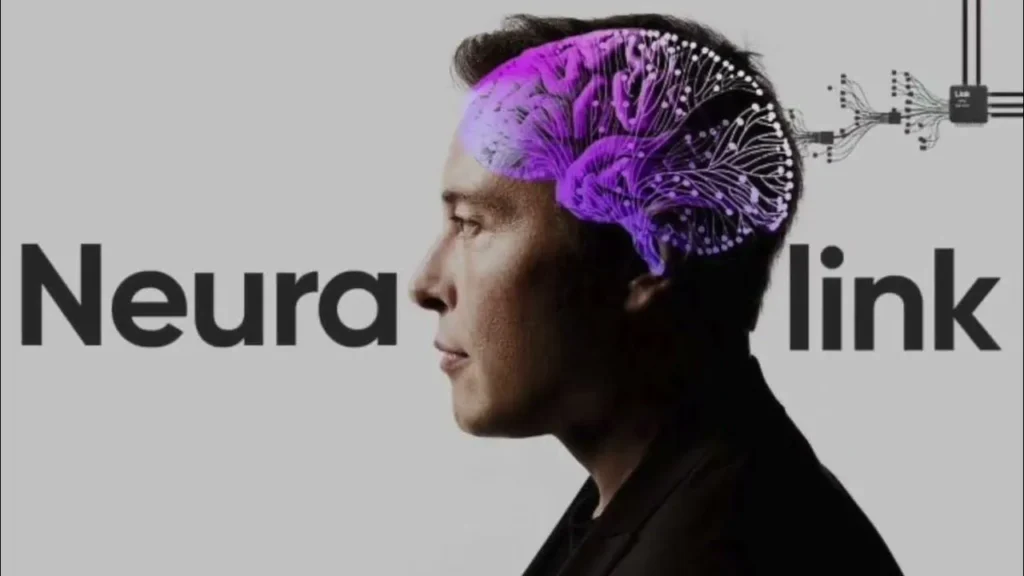
Neuralink’s development offers several possible future scenarios. The first scenario envisions successful testing leading to its adoption in specific markets, which would represent significant progress despite limited reach.
The second, more optimistic scenario envisions widespread adoption following successful human clinical trials, with the potential to revolutionize our interactions with technology. The third, more pessimistic scenario envisions the project failing due to a variety of social, technological, legal, and medical factors.
Realistic scenario
In the most realistic scenario, Neuralink hopes to succeed by focusing on medical applications for people with severe disabilities. This targeted approach is likely to resonate with users who need life-changing technologies, resulting in early adoption among this target group.
In this case, greater acceptance by ordinary users will depend on several factors, including the perceived usefulness of the technology, its privacy implications, and the general perception of the risk-to-benefit ratio.
On a societal level, Neuralink’s development will be significantly affected by public and ethical debates. Issues related to data security, long-term health impacts, and equitable access are likely to dominate public debate.
The widespread adoption of Neuralink’s technology depends on its clinical efficacy and safety, combined with Neuralink’s ability to resolve ethical issues and gain public trust.
Optimistic scenario
In the most optimistic scenario, Neuralink’s technology will move beyond early medical applications and become integrated into everyday life. This scenario envisions a future in which the benefits of technology are clearly demonstrated and recognized, even in medical terms, and generate interest in various sectors of society.
Consumer interest in Neuralink is expected to expand beyond those with medical needs, driven by the appeal of enhanced cognitive abilities and sensory experiences. As people become more familiar with the technology, concerns about invasiveness and data privacy may diminish, especially if Neuralink can offer strong security guarantees.
From a societal perspective, the optimistic scenario sees Neuralink as a catalyst for positive change. This technology could overcome the limits of human capacity and offer new forms of interaction and communication.
While ethical concerns remain, the potential benefits in education, labor productivity, and overall quality of life may far outweigh them. Regulatory agencies could be inspired by public enthusiasm and technological advances to implement more flexible policies to improve quality of life.
In this scenario, Neuralink becomes a symbol of human progress. It seamlessly integrates into everyday life and opens up new possibilities for human-machine interaction.
Its success will set a precedent for other technologies at the intersection of biology and technology, such as gene editing and bioelectronic medicine, paving the way for a future where such integration is the norm.
About this neurotech research news
Author: Omar H. Fares
Source: The Conversation
Contact: Omar H. Fares – The Conversation
Image: The image is credited to StackZone Neuro
A scenario of despair
In the worst-case scenario, Neuralink will face significant challenges that will hinder its widespread adoption and success. This scenario considers the possibility that the technology will not meet high expectations, whether due to technical limitations, security concerns, or ethical dilemmas.
From a technical perspective, the complexity of interacting directly with the human brain may be higher than expected, leading to disappointing performance or reliability issues.
Along with potential long-term health consequences, concerns about physical and psychological safety may also be greater than initially thought. This can deter both consumers and medical professionals.
The invasive nature of technology and privacy concerns surrounding brain data can lead to significant public anxiety. These doubts can be heightened if early use of technology is seen as benefiting only a privileged minority, increasing social inequality.
From an ethical perspective, the prospect of brain-computer interfaces could raise questions about human identity, autonomy, and the nature of consciousness. These concerns could fuel public resistance, potentially leading to strict legal restrictions and delays in research and development.
In this scenario, Neuralink’s ambitious vision could be thwarted by a combination of technical hurdles, public distrust, ethical controversies, and regulatory challenges. This could ultimately lead to the project’s stagnation or decline.
While Neuralink offers countless possibilities, its future extends beyond technological advancements. The outcome of this initiative has important implications for the future of neural interfaces and our understanding of human capabilities, emphasizing the need for a thoughtful approach to this type of innovation.